The Miraculous Staircase at Loretto Chapel — Santa Fe, New Mexico
Inside a small chapel in Santa Fe stands a remarkable wooden staircase with no central support post and a legend involving answered prayers and a mysterious carpenter who vanished without payment. I went to see it for myself, and the story is every bit as interesting as the staircase.

Back in April 2023, Lisa spent a week in Santa Fe, New Mexico, staying at an Airbnb with a friend of hers.
The morning after I dropped her off at the airport, I loaded up Phyllis, our motorhome at the time, and headed west.
I spent my first night at my usual overnight stop in Wichita, Kansas. The following night found me on the west side of Amarillo, Texas, and by the next afternoon, I had reached Santa Fe.
That gave me three or four days on my own before Lisa would join me. Even though we were in the same town, we had agreed not to see or contact each other until her week with her friend was over.
That worked out rather well. It gave me the freedom to explore Santa Fe at my own pace.
Santa Fe is a fascinating city with a remarkably rich history, much of it stretching back to the Spanish colonial period. There was plenty to explore, and I was in no particular hurry.
But this particular story isn't about Santa Fe as a whole. It's about a small chapel, an unusual wooden staircase, and a legend that has been told for well over a century.
The Legend of the Miraculous Staircase
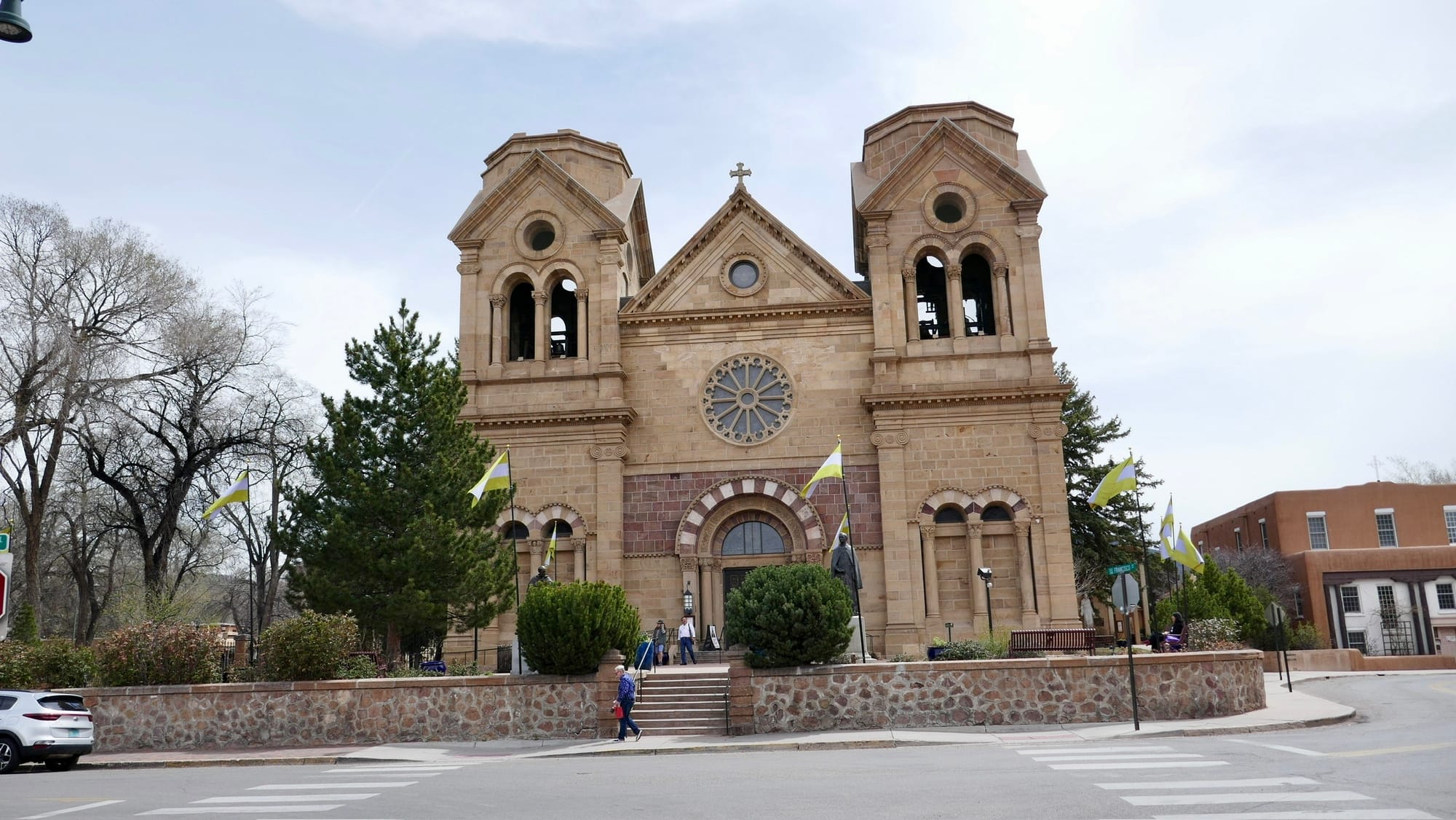
The Loretto Chapel was completed in 1878 as part of the Loretto Academy, a school operated by the Sisters of Loretto.
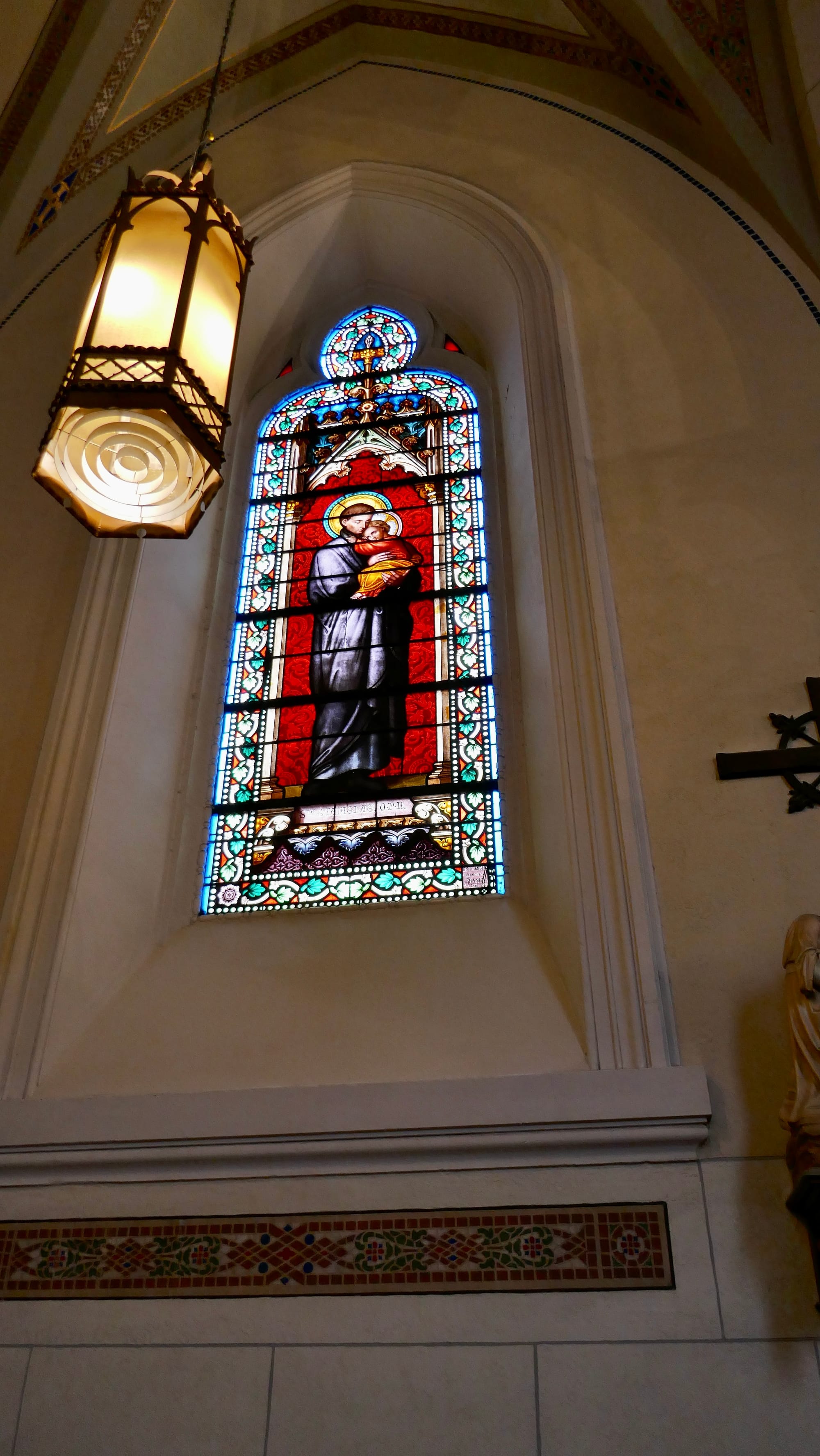
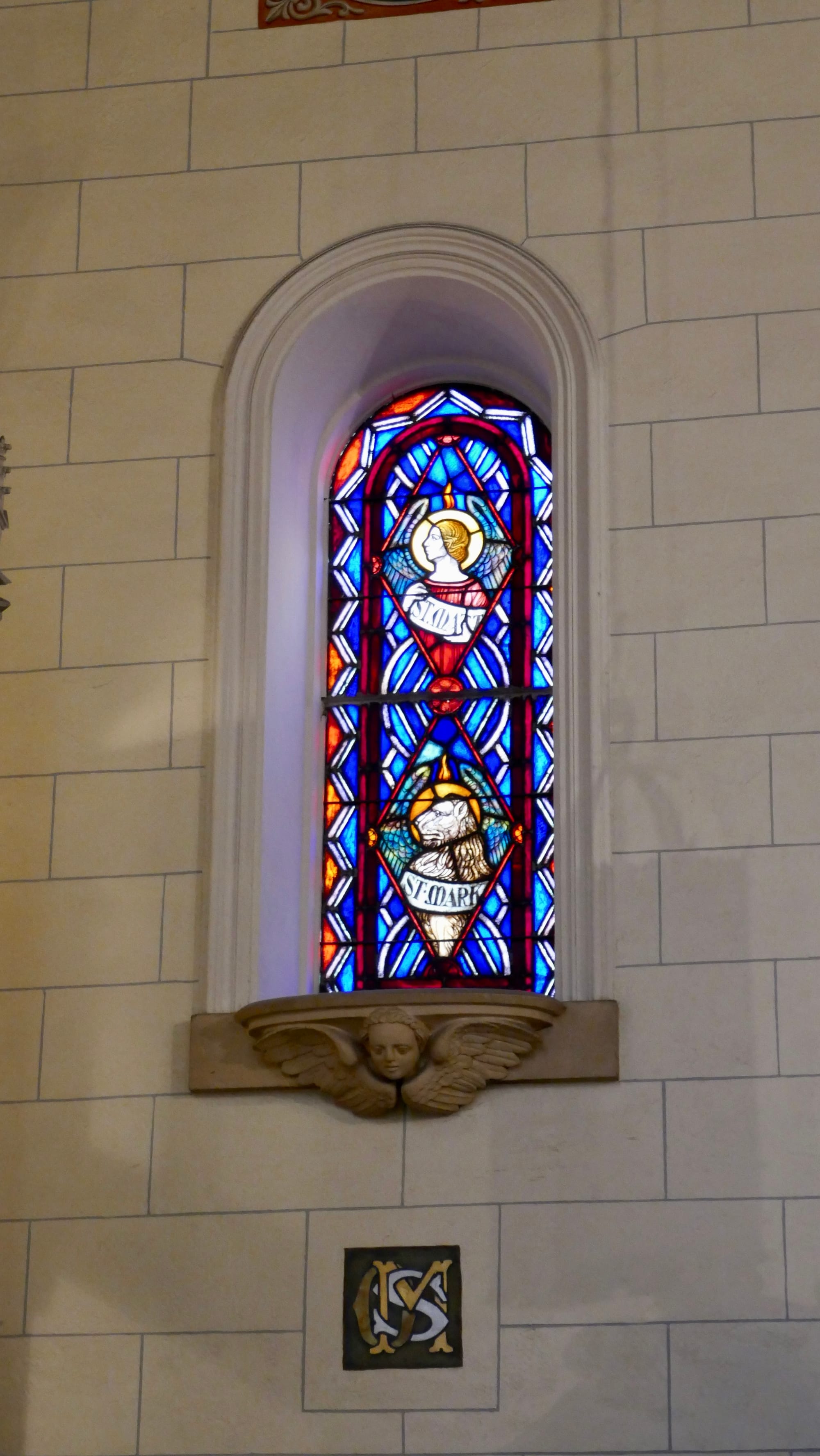
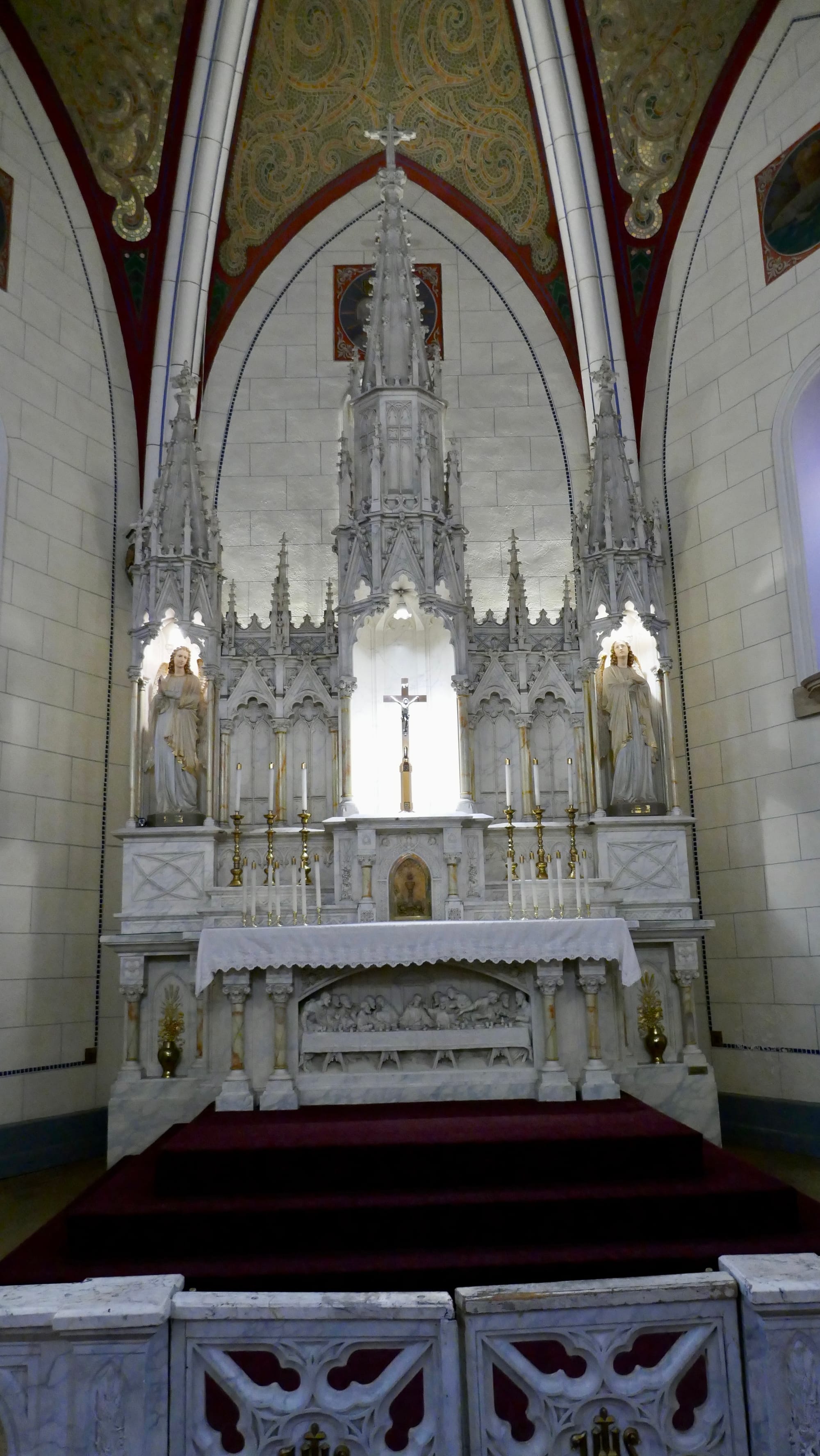
It was a beautiful chapel, built in the Gothic Revival style, with stained-glass windows, vaulted ceilings, and elaborate architectural details.
But there was a problem.
The chapel had a choir loft approximately 22 feet above the floor, and nobody had provided a staircase to reach it.
According to the legend, the Sisters consulted several carpenters, but each came to essentially the same conclusion. There simply wasn't enough room for a conventional staircase without sacrificing a considerable amount of the chapel's limited floor space.
Their recommendation was to use a ladder.
For the Sisters, that wasn't much of a solution.
So they turned to prayer.
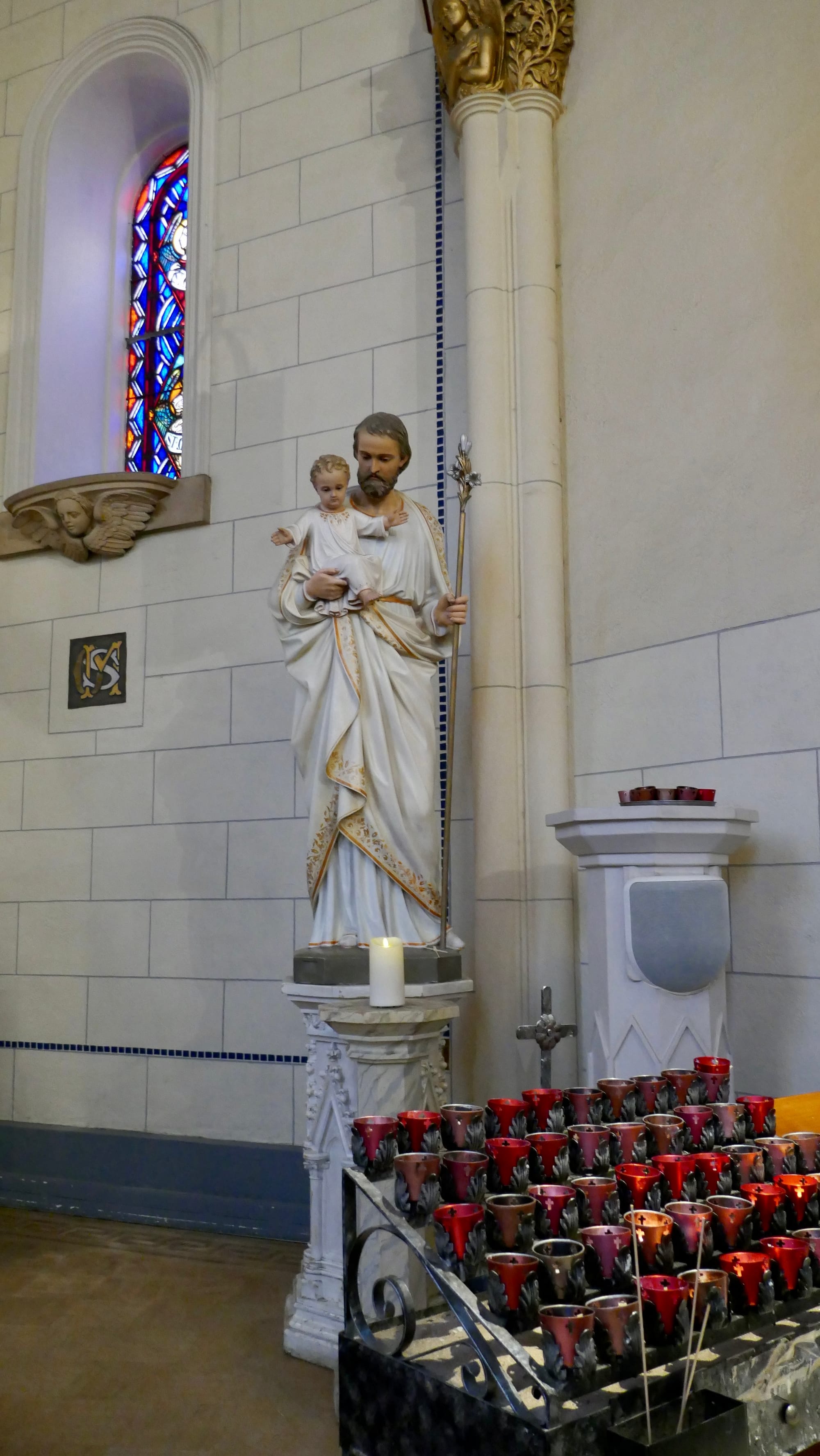
They began a nine-day novena to St. Joseph, the patron saint of carpenters, asking for help in finding a way to reach their choir loft.
And this is where the story gets interesting.
According to the account passed down through the years, on the ninth and final day of the novena, a stranger appeared at the chapel.
He reportedly arrived with a donkey and a toolbox, looking for work.
The man offered to build the staircase.
The Sisters agreed, and the mysterious carpenter went to work.
Using simple hand tools and wooden pegs rather than conventional nails, he began constructing a staircase unlike anything the Sisters had imagined.
He worked for months, apparently without assistance.
When he finished, the result was extraordinary.
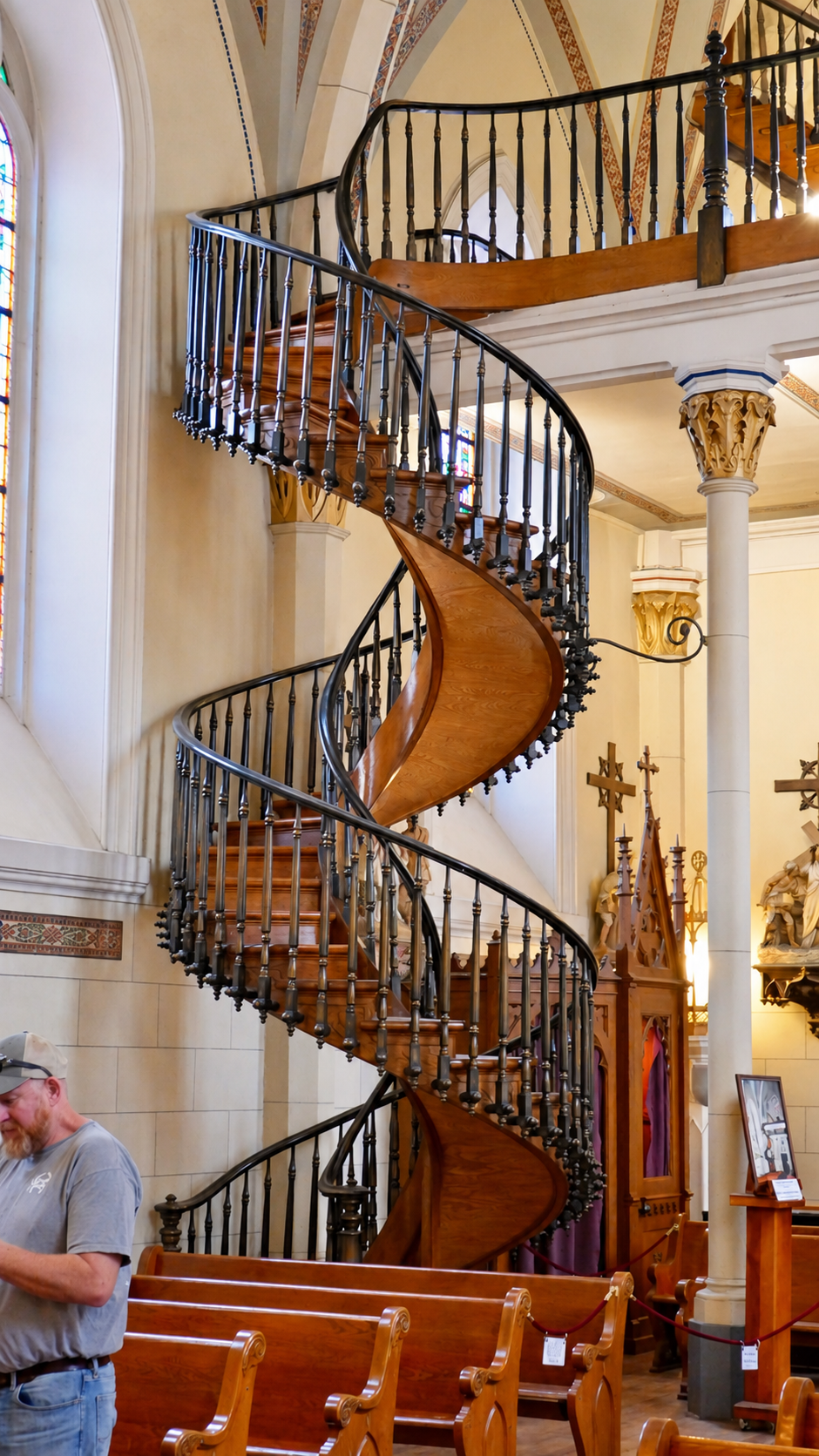
The wooden staircase rose to the choir loft in two complete 360-degree turns. Unlike a conventional spiral staircase, it had no central supporting post.
Even more remarkably, the finished staircase appeared to stand without any obvious means of support.
And then something even stranger happened.
The carpenter disappeared.
According to the legend, he left without collecting payment and without giving the Sisters an opportunity to thank him.
The Sisters reportedly searched for the man. Inquiries were made, including attempts to determine where he had obtained the lumber used in the construction. But nobody could identify the mysterious craftsman or explain where he had gone.
Consider the circumstances.
The Sisters had a problem that nobody seemed capable of solving. They prayed for nine days to the patron saint of carpenters. On the final day, an unknown carpenter appeared, built a remarkable staircase, and then vanished without payment.
It isn't difficult to understand why some of the Sisters came to believe that the stranger had been St. Joseph himself.
Others believed he might have been someone sent by St. Joseph in answer to their prayers.
And so the staircase became known as the Miraculous Staircase.
More than a century later, people are still coming to Santa Fe to see it.
Seeing It for Myself
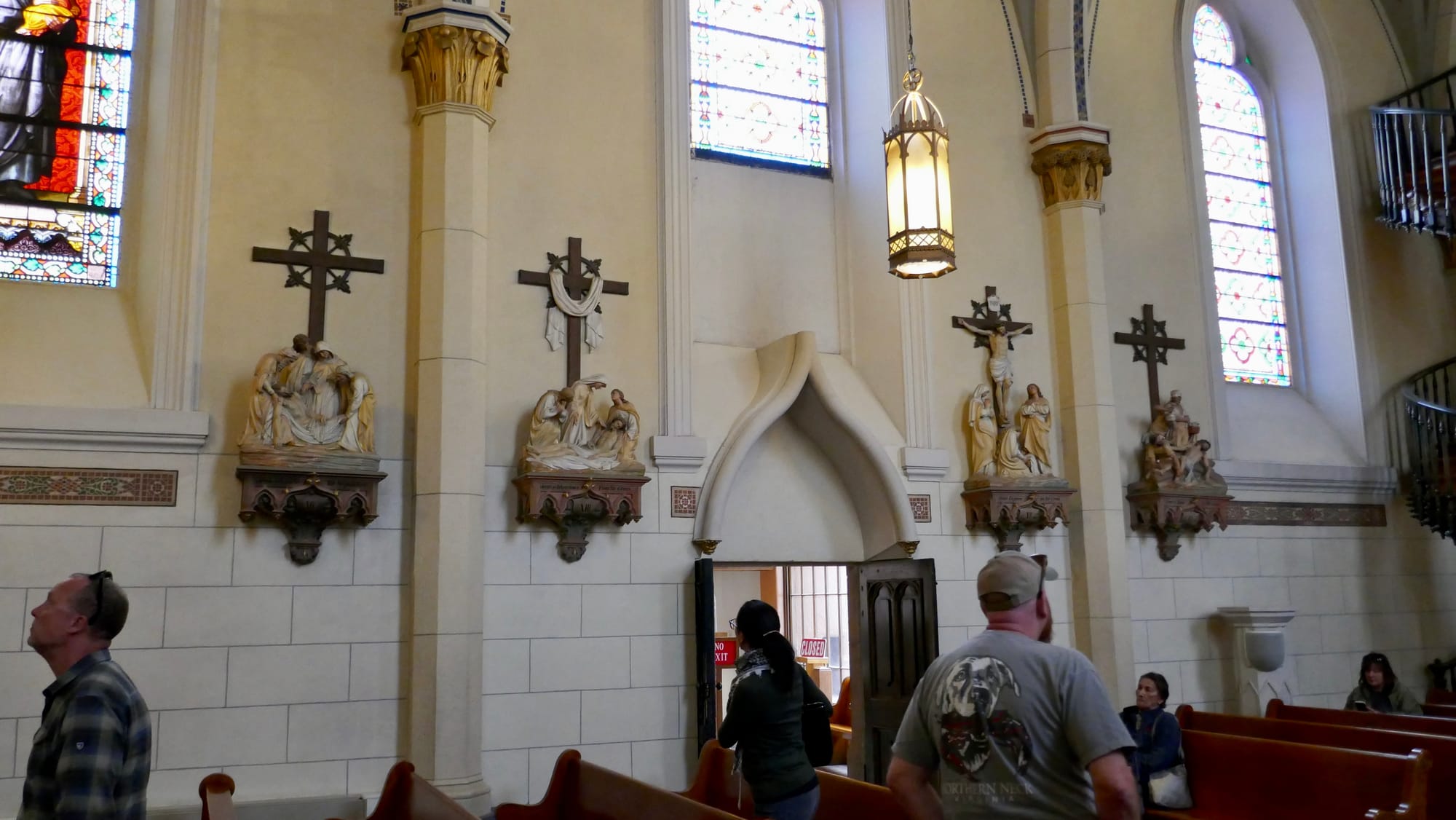
The first thing that struck me when I entered Loretto Chapel was just how small it was.
I suppose that shouldn't have surprised me, given when it was built, but somehow I had pictured something much larger.
The chapel itself is beautiful. The stained-glass windows, decorative columns, woodwork, and architectural details are worth spending some time looking at.
But there's no question what draws your attention.
The staircase.
And I'll tell you something. It's a little unsettling to look at.
There it is, winding upward through two complete turns, seemingly suspended in the middle of the chapel.
You can walk around it, look at it from different angles, and try to figure out how the thing manages to hold itself together.
I had heard stories about engineers studying the staircase and its unusual construction. Standing there looking at it, I could certainly understand their interest.
What makes it particularly fascinating is that it doesn't look like something that should work.
And yet, there it stands.
I also found myself thinking about the carpenter who built it. Whoever he was, and whatever you believe about the legend, the man clearly knew what he was doing.
Remember, this staircase was built in the late 1800s, using hand tools, long before modern computer-aided design or today's construction equipment.
That's impressive by any standard.
So, What Do We Actually Know?
As much as I enjoy the legend, there are a few historical details worth mentioning.
The staircase is real, of course, and its unusual construction is well documented.
It makes two complete turns without the conventional central post found in most spiral staircases. The curved wooden stringers, which support the steps, are an important part of how the structure carries its weight.
The staircase also wasn't quite what we see today when it was first completed.
Originally, it had no handrail. Those elaborate railings were added years later, reportedly because the staircase was so difficult and intimidating to climb without them. Additional bracing was also installed in later years.
And then there's the question of who built it.
Historical research has pointed toward a French carpenter named François-Jean Rochas, sometimes called Frenchy Rochas.
An 1895 newspaper account credited him with building the staircase, and records indicate that he had done work for the Sisters of Loretto.
That's compelling evidence, although it doesn't settle every detail of the story.
The engineering isn't necessarily miraculous, either. Skilled carpenters and engineers can explain how the unusual structure supports itself, even without a conventional center post.
But here's where I come down on the whole thing.
Knowing how the staircase works doesn't make it any less interesting. And identifying a possible carpenter doesn't change the fact that someone built an extraordinary piece of woodworking in a very small chapel nearly 150 years ago.
As for the legend?
I rather like it.
Whether you believe the stranger was St. Joseph, someone answering the Sisters' prayers, or simply a very talented carpenter who happened to arrive at the right time, it's a good story.
And sometimes a good story deserves to survive alongside the historical facts.
Worth the Stop?
Absolutely.
I spent about an hour inside the chapel, much of it taking photographs. You certainly don't need an entire afternoon to see the place, but I was glad I took the time.
And while the staircase is unquestionably the main attraction, don't overlook the chapel itself. As you'll see in the gallery below, it's a beautiful little building with plenty of interesting details.
If you're ever anywhere near Santa Fe, I'd consider Loretto Chapel a must-stop.
You don't have to believe in miracles to appreciate what you're looking at.
But you might find yourself wondering just a little.
Photo Gallery
Loretto Chapel — Santa Fe, New Mexico, April 2023